

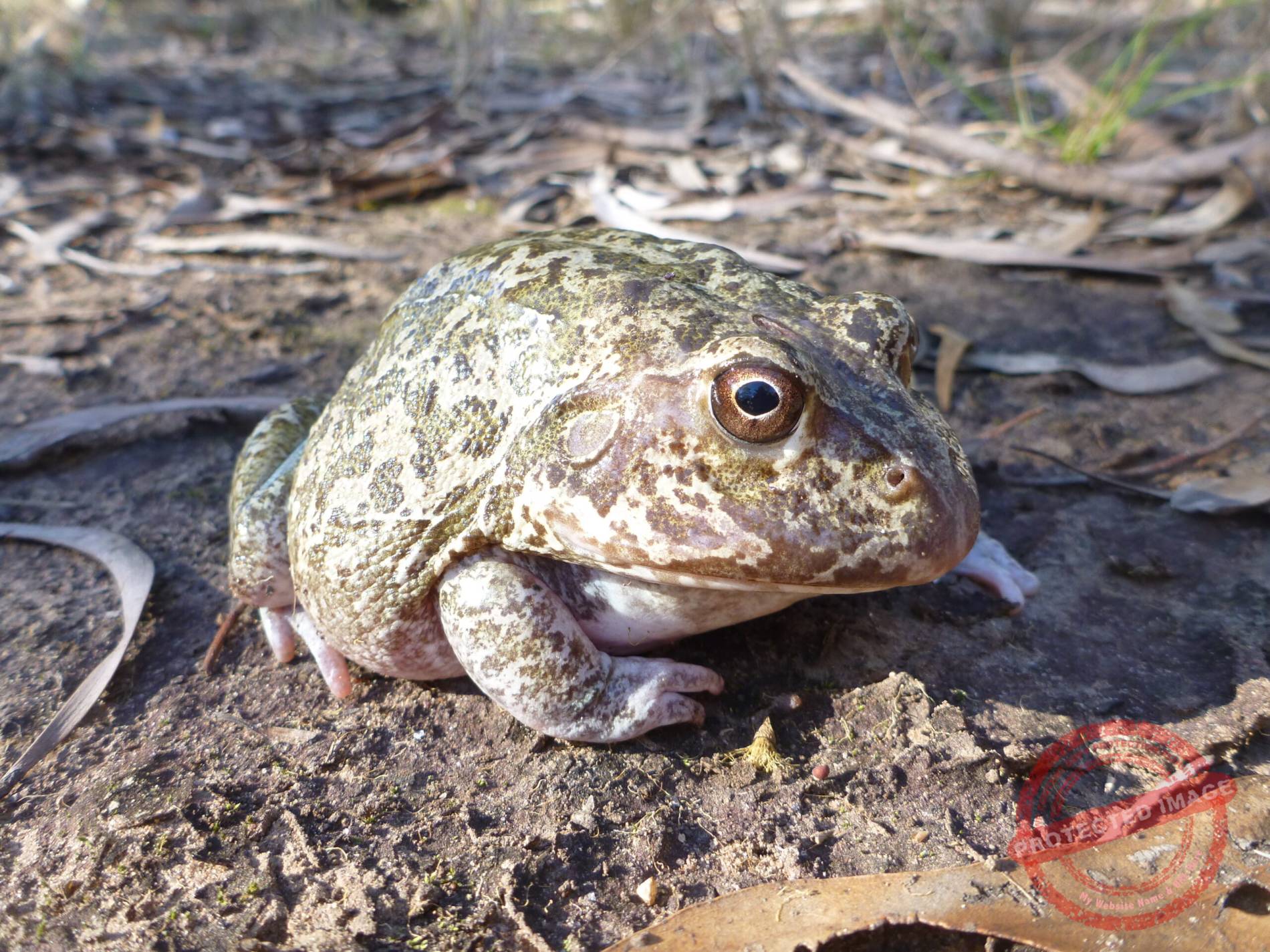
In the expansive floodplains and ephemeral wetlands of eastern Australia, a robust amphibian emerges with the rains, its deep calls resonating across the waterlogged landscape. The Eastern Snapping Frog, also known as the New Holland Frog or Wide-mouthed Frog, is a burrowing species uniquely adapted to the region’s climatic extremes. Spending much of its life beneath the soil’s surface, this frog exemplifies resilience and the intricate balance of Australia’s wet/dry cycles.
Identification
The Eastern Snapping Frog is a large, stout amphibian, with adults typically reaching lengths of 4.5 to 6.5 centimetres, though some individuals may grow up to 10 centimetres. Its skin varies from pale grey to brown or yellowish tones, occasionally adorned with darker blotches. A distinctive dark stripe extends from the snout, through the tympanum, to the shoulder, and a secondary dark band may run from beneath the eye to the mouth. The thighs often exhibit a bluish hue, and the toes are slightly webbed, aiding in aquatic navigation. The species’ wide mouth and large head are characteristic features, aligning with its voracious feeding habits.
Habitat and Distribution
Endemic to Australia, the Eastern Snapping Frog occupies a broad range across eastern regions, including coastal areas and inland territories. It is commonly found in northern New South Wales and throughout much of Queensland, except for the far western areas. The species favours black-soil plains, floodplains near rivers, dams, ditches, and claypans within woodlands and grasslands. Its burrowing nature allows it to inhabit areas prone to seasonal dryness, retreating underground to escape harsh conditions.
Ecological Role
As an opportunistic predator, the Eastern Snapping Frog plays a significant role in controlling populations of various invertebrates and small vertebrates. Its diet includes insects, arachnids, small mammals, reptiles, and even other frogs. This broad diet helps maintain ecological balance within its habitat. In turn, the frog serves as prey for larger predators, contributing to the complex food web of its ecosystem.
Behaviour and Reproduction
Primarily nocturnal, the Eastern Snapping Frog becomes active after heavy rains during spring, summer, and early autumn. Males produce a deep “waah” call from in or beside water to attract females. Females lay up to 5,000 eggs in non-foamy masses in shallow water. These clumps initially float but later sink. Tadpoles are large, reaching up to 10 centimetres, and undergo metamorphosis within 4 to 6 weeks, emerging as juveniles measuring 3.5 to 4 centimetres. The species’ burrowing behaviour is a key adaptation, allowing it to aestivate underground during dry periods, encased in a self-made cocoon to conserve moisture.
Conservation Status
The Eastern Snapping Frog is currently listed as Least Concern under the Queensland Nature Conservation Act 1992. Its wide distribution and adaptability contribute to this status. However, ongoing monitoring is essential to ensure populations remain stable, particularly in the face of environmental changes.
Threats
While not currently facing significant threats, the Eastern Snapping Frog could be susceptible to habitat degradation resulting from land clearing, agricultural expansion, and urban development. Climate change poses additional concerns, with alterations in rainfall patterns potentially affecting breeding opportunities and the availability of suitable habitats. Predation by introduced species such as foxes and feral cats may also impact local populations.
Conservation Efforts
Conservation strategies for the Eastern Snapping Frog focus on habitat preservation and the implementation of land management practices that maintain the integrity of floodplain and grassland ecosystems. Research into its ecological requirements and population dynamics is crucial for informing conservation actions. Public education initiatives can also enhance awareness of the species and promote behaviours that support its conservation.
Final Thoughts
The Eastern Snapping Frog exemplifies the remarkable adaptations of amphibians to Australia’s variable climates. Its burrowing lifestyle and opportunistic feeding habits highlight the intricate evolutionary pathways that have enabled it to thrive in challenging environments. Safeguarding this species entails a commitment to preserving the delicate balance of wetland and grassland ecosystems, ensuring that the resonant calls of the Eastern Snapping Frog continue to echo across the floodplains for generations to come.
Fauna Resources specialises in the safe handling of a range of different fauna species, through safe, effective and ethical fauna solutions. By providing dedicated fauna services, through passionate fauna spotter catchers and fauna specialists, we can support the unique terrestrial ecosystems and rich biodiversity Australia has to offer.
For more information about our specialist fauna services contact Fauna Resources today.