

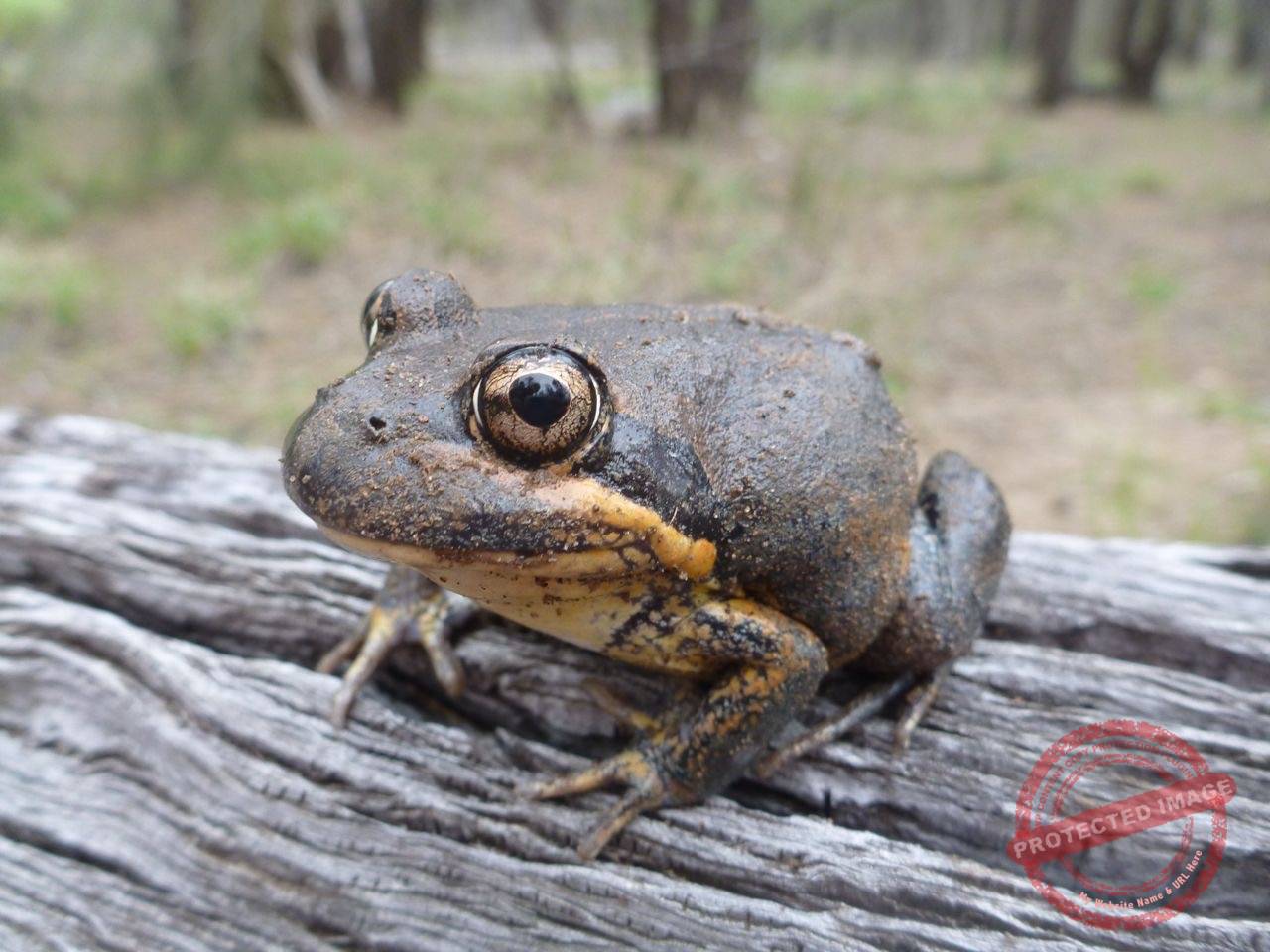
In the warm, humid nights of eastern Australia, a distinctive “bonk” resonates from the edges of swamps and temporary pools – a sound reminiscent of a plucked banjo string. This is the call of the Scarlet-sided Pobblebonk, also known as the Northern Banjo Frog, a burrowing amphibian uniquely adapted to the rhythms of its environment. With vibrant flashes of scarlet along its flanks and thighs, this frog adds a splash of colour to the often-muted tones of its woodland and grassland habitats.
Identification
The Scarlet-sided Pobblebonk is a robust frog, reaching lengths of up to 75 millimetres. Its dorsal surface is typically brown, adorned with darker blotches that provide effective camouflage among leaf litter and soil. A prominent dark stripe extends from the snout through the eye to the shoulder, bordered below by a raised cream or orange bar. The most striking features are the vivid red-orange or scarlet markings on the groin, thighs and flanks, which give the frog its common name. The underbelly is generally white or cream and the armpits exhibit an orange hue. These distinctive colourations not only aid in identification but may also serve as a warning to potential predators.
Habitat and Distribution
Endemic to Australia, the Scarlet-sided Pobblebonk is found throughout eastern Queensland, extending from the coastal lowlands to the tip of Cape York Peninsula and into northeastern New South Wales along the western edge of the Great Dividing Range. It inhabits a variety of environments, including river flats, grassy open forests, woodlands and marshy areas. The species shows a preference for regions near permanent water bodies or temporary pools that form after heavy rains. During dry periods, these frogs burrow underground, emerging en masse following substantial rainfall to breed and feed.
Ecological Role
As insectivores, Scarlet-sided Pobblebonks play a crucial role in controlling insect populations within their ecosystems. By consuming a variety of invertebrates, they help maintain the balance of these communities. Their burrowing behaviour also contributes to soil aeration and nutrient mixing, enhancing soil health and promoting plant growth. In turn, they serve as prey for a range of predators, including birds, reptiles and mammals, thus occupying an integral position in the food web.
Behaviour and Reproduction
The life cycle of the Scarlet-sided Pobblebonk is closely tied to rainfall patterns. Breeding typically occurs from October to May, triggered by heavy rains that create suitable aquatic habitats. Males produce a distinctive “bonk” call from concealed positions in water to attract females. Eggs are laid in large, floating foam nests on the water’s surface. Tadpoles hatch within two to three days and are dark brown, growing up to 70 millimetres in length. Metamorphosis into terrestrial frogs occurs after approximately 70 days, with juveniles measuring around 20 millimetres. The characteristic scarlet markings become apparent about a week after metamorphosis.
Conservation Status
The Scarlet-sided Pobblebonk is currently listed as Least Concern under the Queensland Nature Conservation Act 1992 and the International Union for Conservation of Nature (IUCN). This status reflects its wide distribution and presumed large population. However, ongoing monitoring is essential to ensure that populations remain stable, particularly in the face of environmental changes.
Threats
While the species is not currently considered threatened, it faces several potential risks. Habitat loss and degradation due to agricultural expansion, urban development and deforestation can reduce the availability of suitable breeding and foraging sites. Altered hydrological regimes, such as changes to natural water flow and drainage patterns, may impact the formation of the temporary pools essential for breeding. Additionally, climate change poses a long-term threat by potentially altering rainfall patterns and increasing the frequency of droughts, which could disrupt the species’ breeding cycles and reduce habitat availability.
Conservation Efforts
Conservation efforts for the Scarlet-sided Pobblebonk should focus on preserving and restoring natural habitats, particularly wetlands and riparian zones. Implementing sustainable land management practices that maintain the integrity of these ecosystems is crucial. Public education initiatives can also raise awareness about the species and its ecological importance, fostering community support for conservation measures. Protecting areas where the species is known to occur and ensuring the maintenance of natural hydrological processes will further aid in its conservation.
Final Thoughts
The Scarlet-sided Pobblebonk is a remarkable example of adaptation and resilience, thriving in the dynamic environments of eastern Australia. Its distinctive call and vibrant markings make it a unique and valuable component of the region’s biodiversity. By understanding and protecting this species, we not only preserve an intriguing amphibian but also contribute to the health and stability of the ecosystems it inhabits.
Fauna Resources specialises in the safe handling of a range of different fauna species, through safe, effective and ethical fauna solutions. By providing dedicated fauna services, through passionate fauna spotter catchers and fauna specialists, we can support the unique terrestrial ecosystems and rich biodiversity Australia has to offer.
For more information about our specialist fauna services contact Fauna Resources today.