

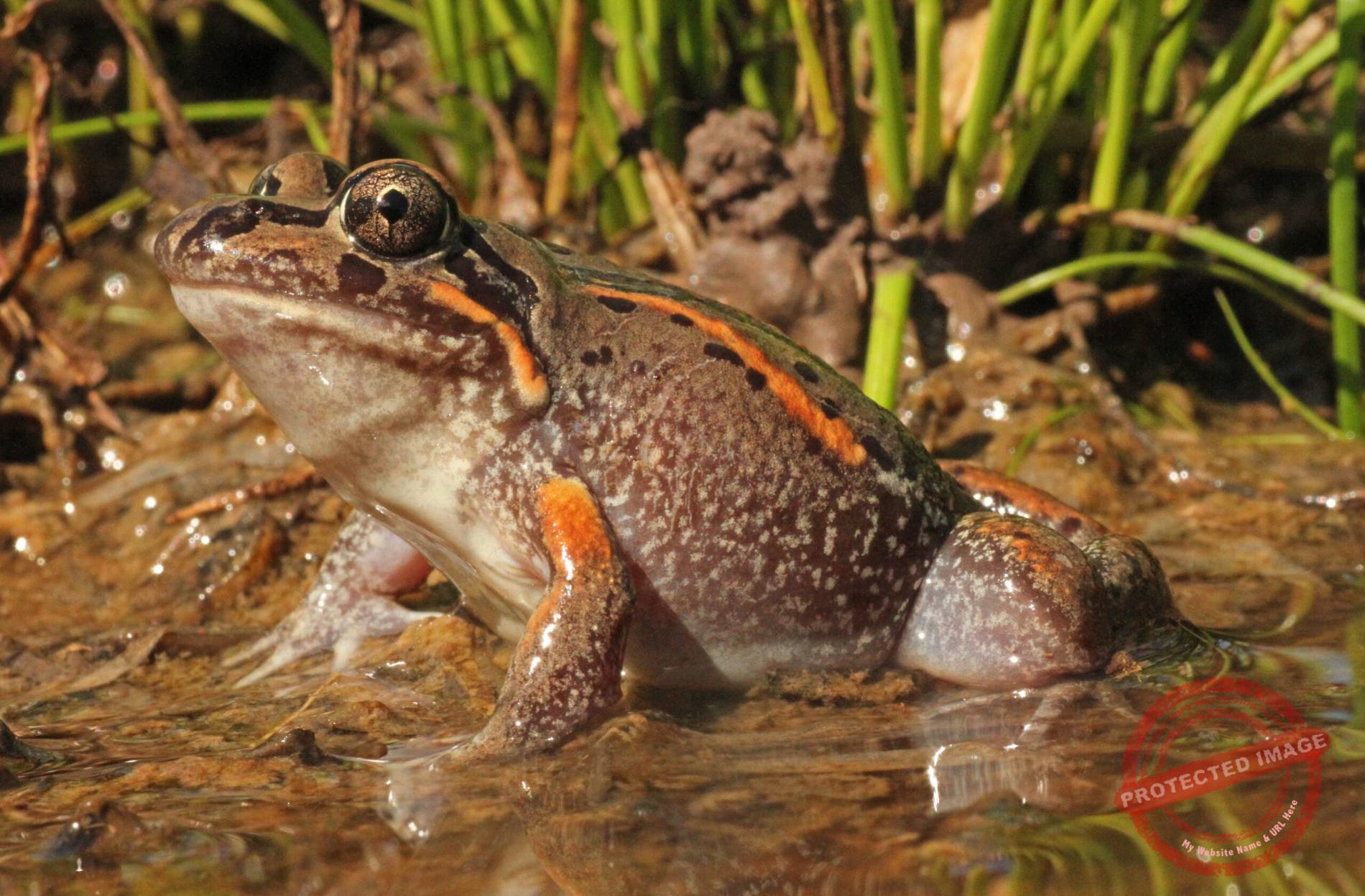
In the seasonally flooded grasslands and open forests of northern Australia, a flash of soft pinkish-orange against a background of green signals the appearance of one of the Top End’s more elusive amphibians. The Salmon-striped Frog is a small, agile species known for its distinct colouration and seasonal appearances after heavy rain. It emerges from concealment with the first monsoon storms, a herald of water’s return and the rapid regeneration of life in Australia’s tropical north.
Identification
The Salmon-striped Frog is a slender, medium-sized species typically reaching 4 to 5.5 centimetres in length. It is pale olive or tan across the back, adorned with a salmon-pink to orange longitudinal stripe that runs from the snout to the vent. A dark line often extends from the nostril through the eye and along the flanks, sometimes bordered by a paler stripe beneath. The underbelly is whitish and granular and the eyes are large with horizontal pupils. The skin is smooth and the limbs are long and well-suited for leaping. This species is often confused with other striped Litoria frogs but is distinguishable by its unique colouration and slender build.
Habitat and Distribution
The Salmon-striped Frog is found across the tropical northern parts of Australia, particularly in the Northern Territory, Cape York Peninsula and northern Queensland. It inhabits floodplains, open grasslands, paperbark swamps and lightly wooded savannas, where seasonal wetlands form following heavy rains. During the dry season, it retreats to underground refuges or moist hideouts under logs, soil or debris, becoming inactive until conditions improve. It is most frequently observed during the wet season when it gathers in shallow, temporary water bodies to breed.
Ecological Role
This frog plays a vital role in the wet-dry tropical ecosystems it inhabits. As an insectivore, it helps regulate populations of mosquitoes and other flying insects, especially during breeding booms following rain. The frog’s tadpoles contribute to nutrient cycling and help support aquatic food webs, becoming prey for birds, fish and aquatic invertebrates. The species’ sudden appearance with the wet season reflects its finely tuned ecological timing – a pulse of life that coincides with the arrival of water, warmth and opportunity.
Behaviour and Reproduction
The Salmon-striped Frog is most active during warm, wet nights, often seen leaping through grasses or calling in chorus near shallow pools. Males produce a soft, rolling trill from the edges of temporary waterbodies – a call that attracts females to communal breeding sites. Breeding is explosive and opportunistic, often occurring within days of heavy rainfall. Females lay large clutches of eggs in shallow water, attaching them to submerged vegetation or allowing them to float near the surface.
Tadpoles develop rapidly to take advantage of the ephemeral nature of their aquatic habitats, typically completing metamorphosis within three to five weeks. Newly emerged froglets are quick to disperse and seek out moist refuges as the water recedes. Adults remain largely hidden during the dry season, re-emerging only when environmental conditions become favourable.
Conservation Status
The Salmon-striped Frog is currently listed as Least Concern in Queensland under the Nature Conservation Act 1992. It is considered common and widespread throughout suitable habitat in northern Australia, though its secretive nature means it is likely under-recorded in many areas.
Threats
While not currently threatened on a broad scale, the Salmon-striped Frog may be affected by habitat loss through land clearing, drainage of wetlands and alteration of floodplain hydrology. Changes in rainfall patterns due to climate change may disrupt breeding timing and reduce the availability of suitable ephemeral pools. The spread of chytrid fungus is a concern for many Australian frogs, although the impact on this species remains unclear. Localised threats include trampling by livestock and predation by feral animals such as pigs and cats.
Conservation Efforts
The species benefits from inclusion in protected areas across northern Australia, including national parks and Indigenous-managed lands. Maintaining the integrity of floodplain and wetland ecosystems is essential to supporting breeding success. Monitoring of calling activity and tadpole development during the wet season helps assess population health and distribution. Broader conservation initiatives focused on protecting tropical freshwater systems and preventing habitat degradation also benefit the Salmon-striped Frog and other rain-dependent species.
Final Thoughts
The Salmon-striped Frog is a quiet witness to the rhythms of northern Australia – a frog that waits patiently through heat and dryness, only to emerge in the brief, life-giving weeks when the floodplains fill and the skies break open. To protect this species is to understand the beauty of transience and the ecological artistry of timing. In every streak of pink against green grass and every echo of chorus from a rain-fed pool, it tells the story of life written in water, season and song.
Fauna Resources specialises in the safe handling of a range of different fauna species, through safe, effective and ethical fauna solutions. By providing dedicated fauna services, through passionate fauna spotter catchers and fauna specialists, we can support the unique terrestrial ecosystems and rich biodiversity Australia has to offer.
For more information about our specialist fauna services contact Fauna Resources today.