

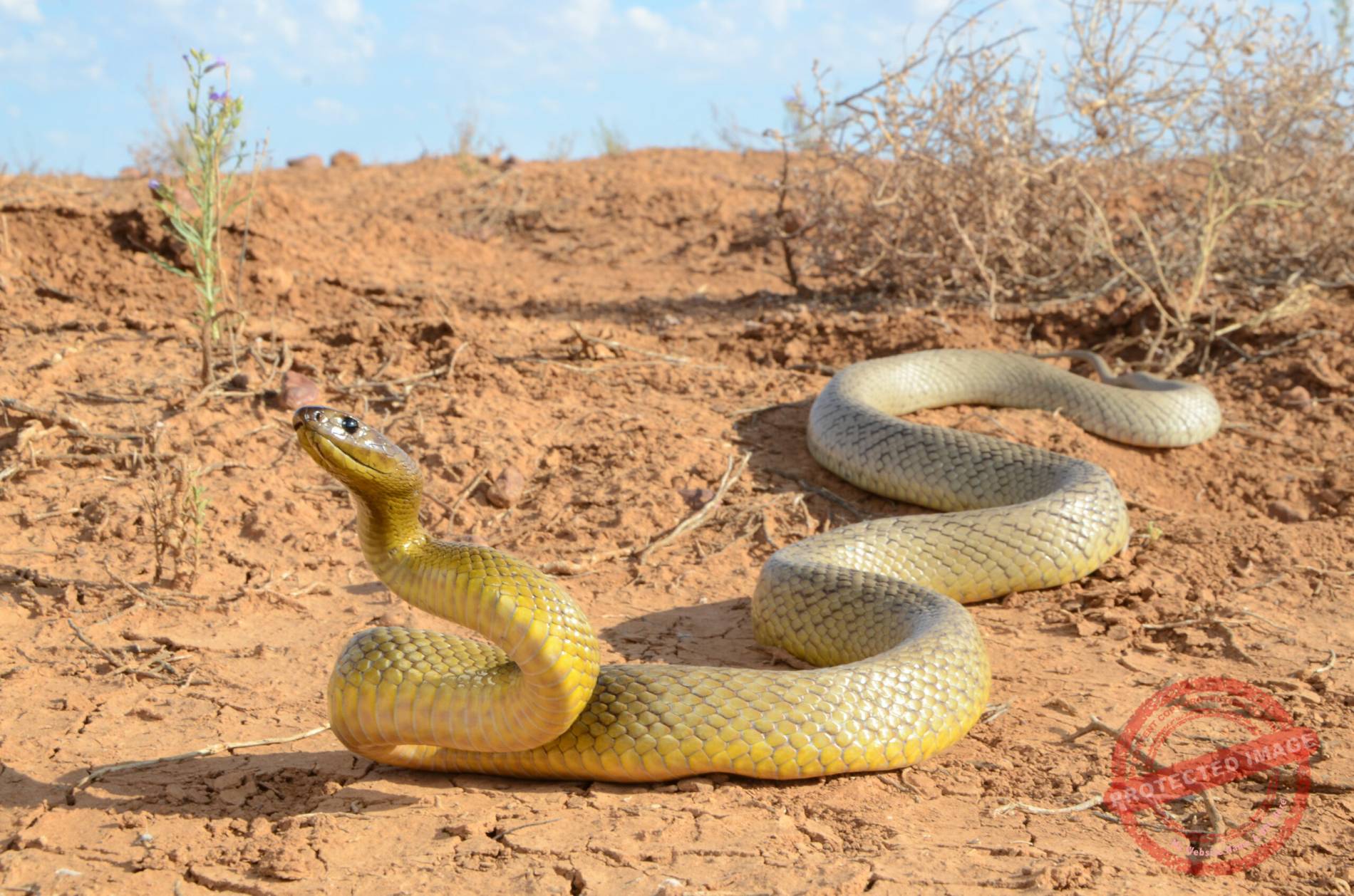
Across the sun-scorched clay plains and gibber deserts of central Australia lives the Inland Taipan (Oxyuranus microlepidotus), a serpent of legend and fact. Known as the “fierce snake,” it possesses the most toxic venom of any snake in the world. Yet despite its fearsome reputation, the Inland Taipan is secretive, rarely encountered in the wild and far from the aggressive image often imagined. It is a species that embodies paradox – lethal in chemistry, but gentle in temperament and vulnerable in the fragile arid ecosystems it inhabits.
Identification
The Inland Taipan is a medium to large elapid, with adults typically measuring 1.8 to 2.5 metres in length. Its body is slender but robust, with smooth scales and a broad head distinct from the neck. Colouration varies seasonally: in the cooler months the taipan is darker brown to black, while in summer it lightens to a sandy olive or fawn – an adaptation thought to assist with thermoregulation. The dorsal surface often shows irregular banding, while the ventral scales are cream to yellow with orange flecks. The eyes are relatively small but keen, befitting its daytime hunting habits.
Habitat and Distribution
Endemic to Australia, O. microlepidotus is confined to arid regions of south-western Queensland, north-eastern South Australia, north-western New South Wales and parts of the Northern Territory. It is strongly associated with blacksoil plains and channel country where deep cracking clay soils provide both shelter and ambush sites. These fissures and abandoned animal burrows are vital refuges, offering protection from extreme heat and predators. Because its range is tied so closely to this specialised environment, the Inland Taipan is patchily distributed and rarely seen.
Ecological Role
The Inland Taipan is a predator of small mammals, particularly the Long-haired rat (Rattus villosissimus) and other native rodents that occur in boom-and-bust cycles across the arid interior. Its highly potent venom allows it to quickly immobilise prey in an environment where escape would mean wasted energy and risk. By controlling rodent numbers during population eruptions, the taipan plays an important balancing role in desert ecosystems. It is, in turn, preyed upon by larger birds of prey and perhaps monitor lizards, though its elusive nature makes direct observations rare.
Behaviour and Reproduction
The Inland Taipan is diurnal and most active in the cooler parts of the morning and late afternoon. It is highly adapted to life in extreme climates, often retreating underground during the hottest parts of the day. Despite its lethal venom, the species is generally shy and avoids confrontation, retreating quickly into cracks or burrows if disturbed.
Breeding occurs in spring, with males engaging in combat rituals where they wrestle for access to females. Females lay clutches of up to 12 to 24 eggs in deep soil crevices or abandoned burrows, with hatchlings emerging fully equipped to survive the arid interior. Sexual maturity is reached at around 3 to 4 years and individuals may live for over a decade.
Conservation Status
The Inland Taipan is not currently listed as threatened under the Queensland Nature Conservation Act 1992 or other state frameworks. Its remote distribution provides some protection from human pressures, though reliable population estimates remain difficult due to its cryptic nature.
Threats
Although secure at present, the Inland Taipan faces potential risks from habitat degradation caused by grazing, invasive species and climate change. The spread of introduced predators such as feral cats and foxes could pose a risk to juveniles, while changes to rainfall cycles may impact rodent prey availability. Because it is highly specialised to cracking-clay habitats, any long-term alteration to these environments would affect its persistence.
Conservation Efforts
Protection of inland habitats, including national parks and reserves across the Channel Country and Simpson Desert, provides security for some populations. Research into its ecology, behaviour and venom has not only informed conservation but also contributed significantly to medical science, as taipan venom has been studied for its complexity and potential biomedical applications. Public education emphasising its non-aggressive nature helps to dispel myths and reduce unnecessary persecution.
Final Thoughts
The Inland Taipan is both feared and revered – the most venomous snake on Earth, yet one of the least likely to strike. Its story is not one of menace, but of adaptation to some of the harshest landscapes on the continent. To encounter Oxyuranus microlepidotus in the wild is to glimpse a rare jewel of the outback, a species whose survival depends on the health of the deserts and plains it calls home.
Protecting it means protecting the balance of Australia’s inland ecosystems, where even the most dangerous creatures hold a gentle place in nature’s design.
Fauna Resources specialises in the safe handling of a range of different fauna species, through safe, effective and ethical fauna solutions. By providing dedicated fauna services, through passionate fauna spotter catchers and fauna specialists, we can support the unique terrestrial ecosystems and rich biodiversity Australia has to offer.
For more information about our specialist fauna services contact Fauna Resources today.