

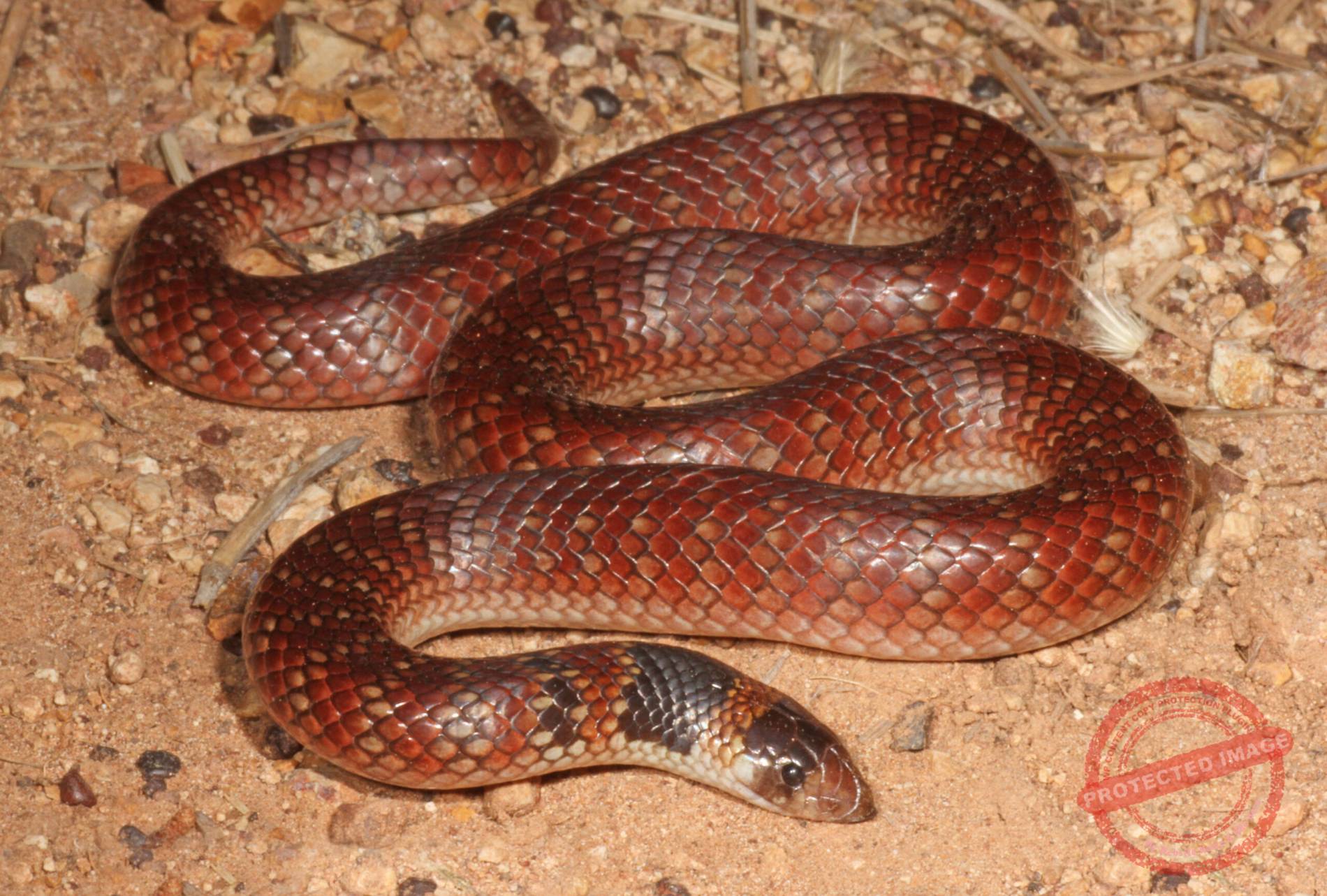
The Australian Coral Snake, also known as the Eastern Shovel-nosed Snake, is a small, elusive serpent native to eastern Australia. Despite its vibrant appearance, this species is often overlooked due to its secretive, burrowing lifestyle. While it shares a common name with the highly venomous coral snakes of the Americas, Brachyurophis australis is considerably less dangerous and plays a unique role in Australia’s diverse reptile fauna.
Identification
Brachyurophis australis is a diminutive snake, typically measuring between 30 to 50 centimetres in length. Its body is adorned with a pink to reddish-brown dorsal surface, accented by narrow, cream-coloured cross-bands edged in dark brown. Notably, it features two prominent dark bands: one across the head and another across the nape. The ventral surface is generally whitish. A distinctive characteristic is its upturned, shovel-like snout, an adaptation that facilitates its burrowing behaviour.
Habitat and Distribution
The Australian Coral Snake inhabits a broad range across eastern Australia, including regions in South Australia, Victoria, inland New South Wales and eastern Queensland. It favours environments such as open woodlands, grasslands, arid scrubs, mulga, brigalow and mallee associations, often preferring sandy or loose soils conducive to burrowing. During daylight hours, individuals are commonly found beneath rocks, logs or leaf litter.
Behaviour and Diet
Primarily nocturnal, Brachyurophis australis emerges at night to hunt, employing its specialised snout to navigate through loose soil and leaf litter. Its diet predominantly consists of reptile eggs, particularly those of lizards and occasionally small lizards themselves. The species is venomous; however, due to its small size and inoffensive nature, it poses minimal threat to humans.
Reproduction
The Australian Coral Snake is oviparous, laying clutches of 4 to 6 eggs. The reproductive season typically aligns with the warmer months, ensuring that hatchlings emerge during periods of abundant prey availability.
Conservation Status
According to the Queensland Department of the Environment, Tourism, Science and Innovation (DETSI), Brachyurophis australis is classified as Least Concern under the Nature Conservation Act 1992. This assessment indicates that the species does not currently face significant threats warranting a higher conservation status. Similarly, the International Union for Conservation of Nature (IUCN) has evaluated the species as Least Concern, reflecting its relatively stable population across its range.
Threats
Although currently listed as Least Concern in Queensland, the Australian Coral Snake is not immune to pressures that could impact its long-term survival. One of the most significant threats is habitat loss and fragmentation due to agricultural development, land clearing and urban expansion. These activities reduce the availability of loose soils and ground cover that the species relies on for shelter and foraging. Additionally, the introduction of feral predators such as cats and foxes presents a constant danger, especially to juvenile snakes, which are more vulnerable to predation. Misidentification by the public can also be problematic; despite being relatively harmless, the Australian Coral Snake is sometimes mistaken for more dangerous species and killed out of fear or misunderstanding. These combined pressures, while not currently pushing the species toward extinction, underscore the importance of continued habitat protection and public education to ensure its persistence in the wild.
Conservation Efforts
Currently, no specific conservation programs target Brachyurophis australis. However, the species benefits from general environmental protections and the preservation of natural habitats within national parks and reserves. Ongoing habitat conservation and public education about the ecological role of this and similar species are vital for its continued well-being.
Final Thoughts
The Australian Coral Snake is a fascinating component of Australia’s herpetofauna, exemplifying unique adaptations and behaviours. Its presence underscores the rich biodiversity of the regions it inhabits. Continued awareness and habitat preservation are essential to ensure that this intriguing species remains a part of Australia’s natural heritage.
Fauna Resources specialises in the safe handling of a range of different fauna species, through safe, effective and ethical fauna solutions. By providing dedicated fauna services, through passionate fauna spotter catchers and fauna specialists, we can support the unique terrestrial ecosystems and rich biodiversity Australia has to offer.
For more information about our specialist fauna services contact Fauna Resources today.