

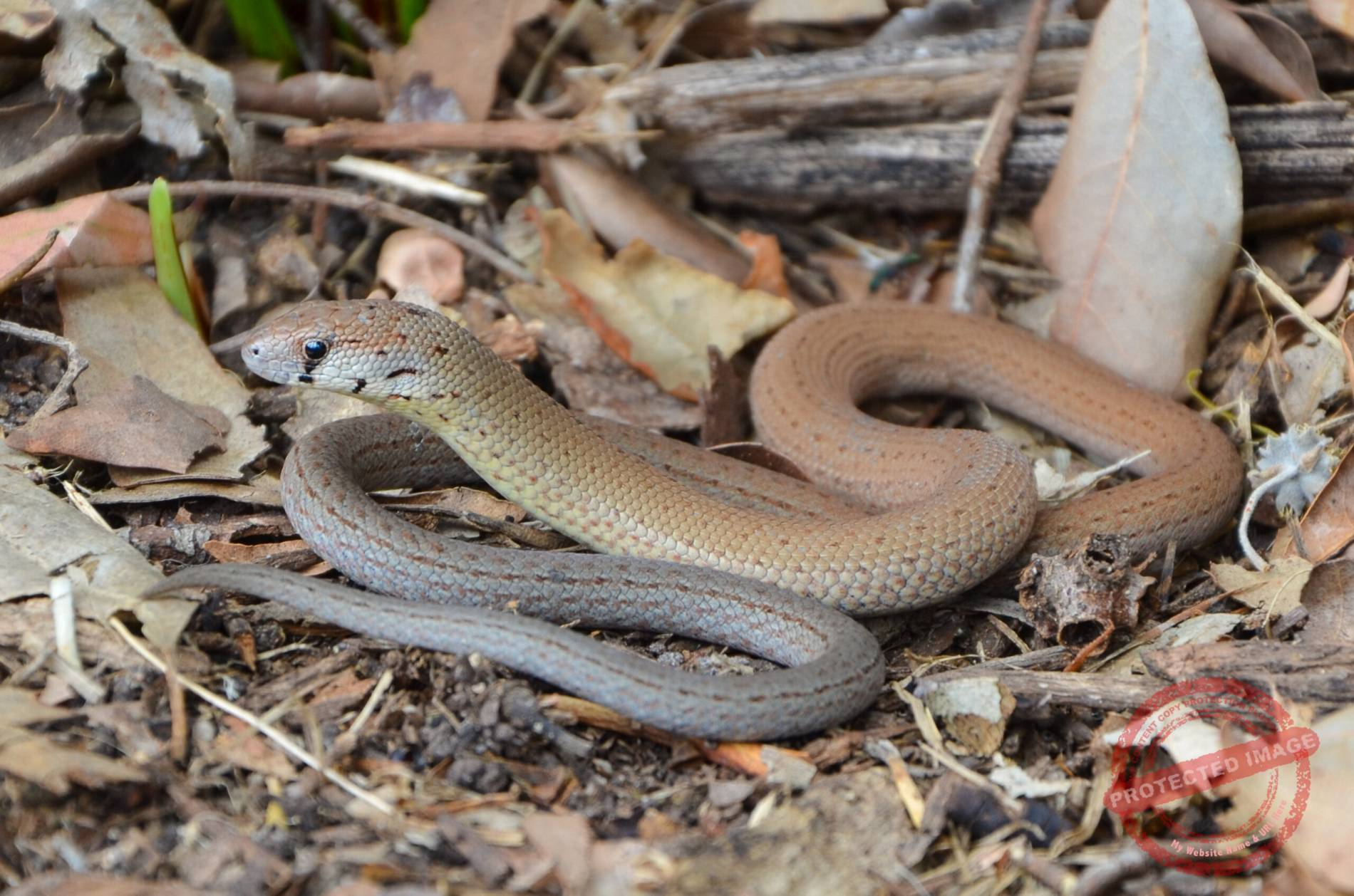
Gliding silently through the grasslands and woodlands of southern and eastern Australia is a reptile that looks for all the world like a snake. The Common Scaly-foot (Pygopus lepidopodus) is, however, a legless lizard – a master of mimicry that shares many outward traits with snakes but remains firmly within the lizard lineage. Its subtle beauty, with bronze tones and an ability to flash a thick, pink tongue, makes it one of Australia’s most fascinating reptiles, a species that blurs the line between the familiar and the overlooked.
Identification
The Common Scaly-foot can grow to a total length of around 80 cm, with the long, tapering tail accounting for more than half of that length. The body is elongated and snake-like, covered in smooth, glossy scales, usually copper-brown, golden, or olive with darker flecks. The belly is paler, often cream or grey. Unlike snakes, it has clearly visible ear openings and a fleshy tongue rather than a forked one. Close to the cloaca, small, flap-like remnants of hindlimbs remain, the “scaly feet” from which its name is derived. These flaps are non-functional but serve as a reminder of its evolutionary history. The eyes are large with round pupils and unlike snakes, the eyelids are movable.
Habitat and Distribution
Pygopus lepidopodus is widespread across southern and eastern Australia, occurring in Queensland, New South Wales, Victoria, South Australia and parts of Western Australia. It inhabits a variety of ecosystems, from heathlands and open woodlands to grasslands and semi-arid scrub. It is often found in areas with dense ground cover, such as leaf litter, tussock grasses or beneath fallen logs and rocks. Although mostly terrestrial, it occasionally climbs into low shrubs in search of food or shelter.
Ecological Role
The Common Scaly-foot is primarily an insectivore, specialising in hunting large arthropods, particularly spiders, crickets and beetles. It also consumes snails and small skinks. By preying on invertebrates, it helps regulate their populations and contributes to the balance of the ecosystems it inhabits. In turn, it is preyed upon by birds of prey, snakes, large lizards and introduced predators such as cats and foxes.
Behaviour and Reproduction
Nocturnal and secretive, this lizard spends its days concealed under logs, rocks, or deep within grass tussocks, emerging at night to forage. It is known for its defensive displays when threatened: opening its mouth, thrashing its body and flashing its broad tongue, which can be mistaken for the threat display of a venomous snake. Unlike snakes, it is incapable of delivering a venomous bite.
Breeding occurs in spring and summer. Females usually lay two eggs per clutch in sheltered locations such as beneath bark or leaf litter. The eggs hatch after several weeks, with hatchlings resembling miniature adults, already equipped for independent life. The species can live for more than a decade in the wild.
Conservation Status
The Common Scaly-foot is listed as a species of Least Concern across its wide distribution. It remains common in many areas but is sensitive to habitat degradation.
Threats
Habitat loss and fragmentation due to agriculture, grazing and urban expansion are the primary threats. The removal of ground cover, such as logs and leaf litter, reduces available shelter. Road mortality is common where populations occur near farmland and towns. Introduced predators, particularly feral cats and foxes, also have a significant impact. Because of its snake-like appearance, the species is often mistakenly killed by people who assume it is venomous.
Conservation Efforts
Conservation actions for Pygopus lepidopodus focus on preserving ground cover and microhabitats within woodlands and grasslands. Predator control programs, especially those targeting cats and foxes, benefit populations. Public education campaigns highlighting the differences between legless lizards and snakes help reduce unnecessary persecution. The species is also included in monitoring programs within national parks and reserves.
Final Thoughts
The Common Scaly-foot is a creature of illusion – a lizard in a snake’s disguise, straddling evolutionary boundaries. Its resilience lies in its ability to adapt to varied landscapes, yet its survival is still tied to the health of the ground layer in Australia’s ecosystems. Protecting Pygopus lepidopodus is as much about protecting fallen timber, leaf litter and native grasslands as it is about safeguarding a single species. It is a reminder that sometimes, the most remarkable lives unfold quietly at our feet.
Fauna Resources specialises in the safe handling of a range of different fauna species, through safe, effective and ethical fauna solutions. By providing dedicated fauna services, through passionate fauna spotter catchers and fauna specialists, we can support the unique terrestrial ecosystems and rich biodiversity Australia has to offer.
For more information about our specialist fauna services contact Fauna Resources today.