

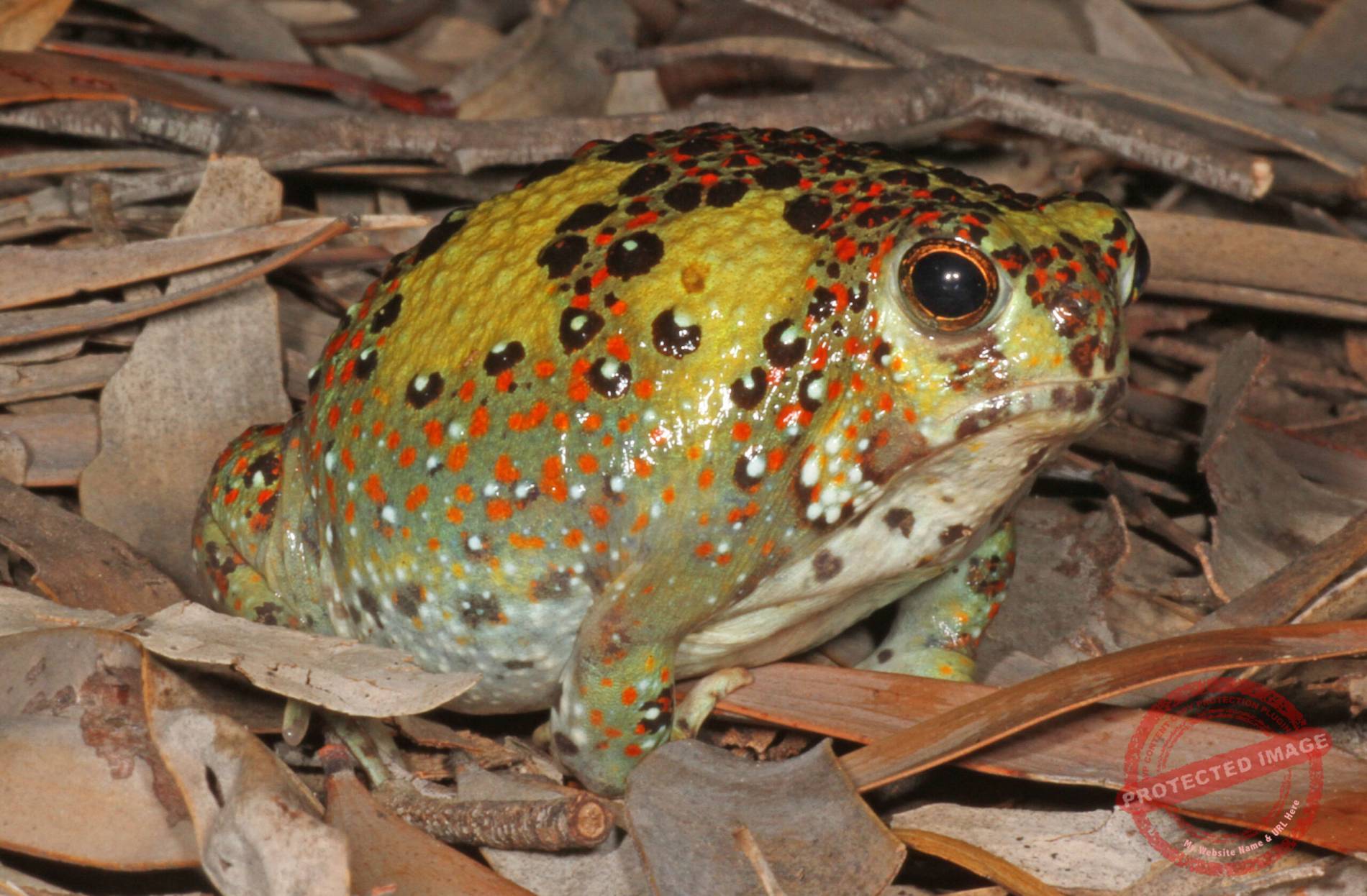
Beneath the cracked clay and red soils of inland New South Wales and southern Queensland lies a creature that embodies patience. For most of the year, the Holy Cross Frog, or Crucifix frog, remains buried deep underground, sealed in a cocoon of its own skin, waiting for the storm that will bring it to life. When heavy rains finally soak the parched landscape, the ground erupts with movement and this plump, jewel-like amphibian emerges in the wet night air. Known for its unusual shape and vivid markings, the Holy Cross Frog is one of Australia’s most striking and secretive burrowing frogs.
Identification
The Holy Cross Frog is short and rotund, often described as having a squat, toad-like appearance. It reaches around 4 to 5 centimetres in length and is easily recognised by its sandy to reddish-brown body, which is typically marked with a distinctive pale cross pattern on its back. The belly is smooth and pale and the skin has a rubbery texture that helps reduce moisture loss. Its short, sturdy limbs are well adapted for digging and unlike many frogs, it burrows head-first into the soil. The eyes are set high on the head, allowing it to keep watch from shallow retreats near the surface during heavy rains.
Habitat and Distribution
The Holy Cross Frog is found in the semi-arid and arid zones of inland eastern Australia, particularly across western New South Wales and southern Queensland. It inhabits claypans, floodplains, grasslands and woodlands where heavy, cracking soils dominate. These soils are essential to its survival, as they allow the frog to burrow deeply and form a protective cocoon during long dry periods. It is rarely seen except in the days following heavy rainfall, when temporary pools form and frogs emerge to breed and feed.
Ecological Role
This species is a highly specialised predator of ants and termites, using its sticky tongue to capture these small insects in large numbers. Its emergence after rainfall plays a significant role in controlling boom-and-bust invertebrate populations, especially during seasonal outbreaks. It is in turn preyed upon by snakes, birds and larger mammals. By spending most of its life underground, the Holy Cross Frog contributes to soil aeration and nutrient mixing. Its brief surface activity is tightly linked to the region’s unpredictable climate, making it an ecological indicator of good seasonal rainfall and healthy arid-zone processes.
Behaviour and Reproduction
The Holy Cross Frog is fossorial, meaning it spends nearly all of its life below ground. It can remain dormant in a state of torpor for many months – sometimes years – waiting for sufficient rain to trigger its emergence. When the conditions are right, it emerges en masse, sometimes in the hundreds, to breed in temporary pools and water-filled depressions.
Males call from shallow water or the edges of flooded areas, producing a low, nasal trill. Females lay their eggs in clumps that float or are attached to submerged vegetation. Tadpoles develop quickly, taking advantage of the fleeting availability of water. In warm conditions, metamorphosis can occur in as little as three to five weeks. Juveniles disperse across the landscape, seeking cracks or soft soil where they can burrow and begin their long wait for the next wet season.
Conservation Status
The Holy Cross Frog is listed as Least Concern in Queensland under the Nature Conservation Act 1992 and is not currently considered threatened in New South Wales. Despite its cryptic lifestyle, the species is believed to be relatively widespread and secure within suitable habitats. Its dependence on specific soil types and rainfall patterns, however, means it may be vulnerable to environmental changes over time.
Threats
While not currently at risk, the Holy Cross Frog faces several potential threats. Habitat loss from agriculture, grazing and land clearing can disrupt the clay soils it relies on for burrowing. Compaction of soil by livestock reduces the availability of suitable shelter. Altered rainfall patterns due to climate change may reduce breeding opportunities or disrupt the timing of emergence. The use of pesticides can affect both the frog and its prey, particularly in farming areas. Additionally, fragmentation of habitat may limit the species’ ability to colonise new breeding sites during wet years.
Conservation Efforts
The Holy Cross Frog is protected under state legislation and benefits from general amphibian conservation measures, particularly those focused on maintaining natural water cycles and protecting clay-based floodplain systems. Efforts to manage grazing intensity, prevent soil compaction and retain vegetation cover help maintain viable habitat. Community awareness programs that highlight the frog’s unique adaptations and ecological role contribute to its protection, especially in regions where it may be overlooked or misidentified.
Final Thoughts
The Holy Cross Frog is a creature of rain and resilience – a survivor sculpted by the extremes of the Australian interior. Its emergence signals abundance, renewal and the mysterious workings of life beneath the soil. Though rarely seen, its presence reminds us that much of Australia’s biodiversity exists quietly, beneath the surface, waiting for its moment to shine. Protecting this remarkable frog means protecting the rains, the soils and the ancient rhythm of life that pulses through the inland when the storm clouds finally break.
Fauna Resources specialises in the safe handling of a range of different fauna species, through safe, effective and ethical fauna solutions. By providing dedicated fauna services, through passionate fauna spotter catchers and fauna specialists, we can support the unique terrestrial ecosystems and rich biodiversity Australia has to offer.
For more information about our specialist fauna services contact Fauna Resources today.