

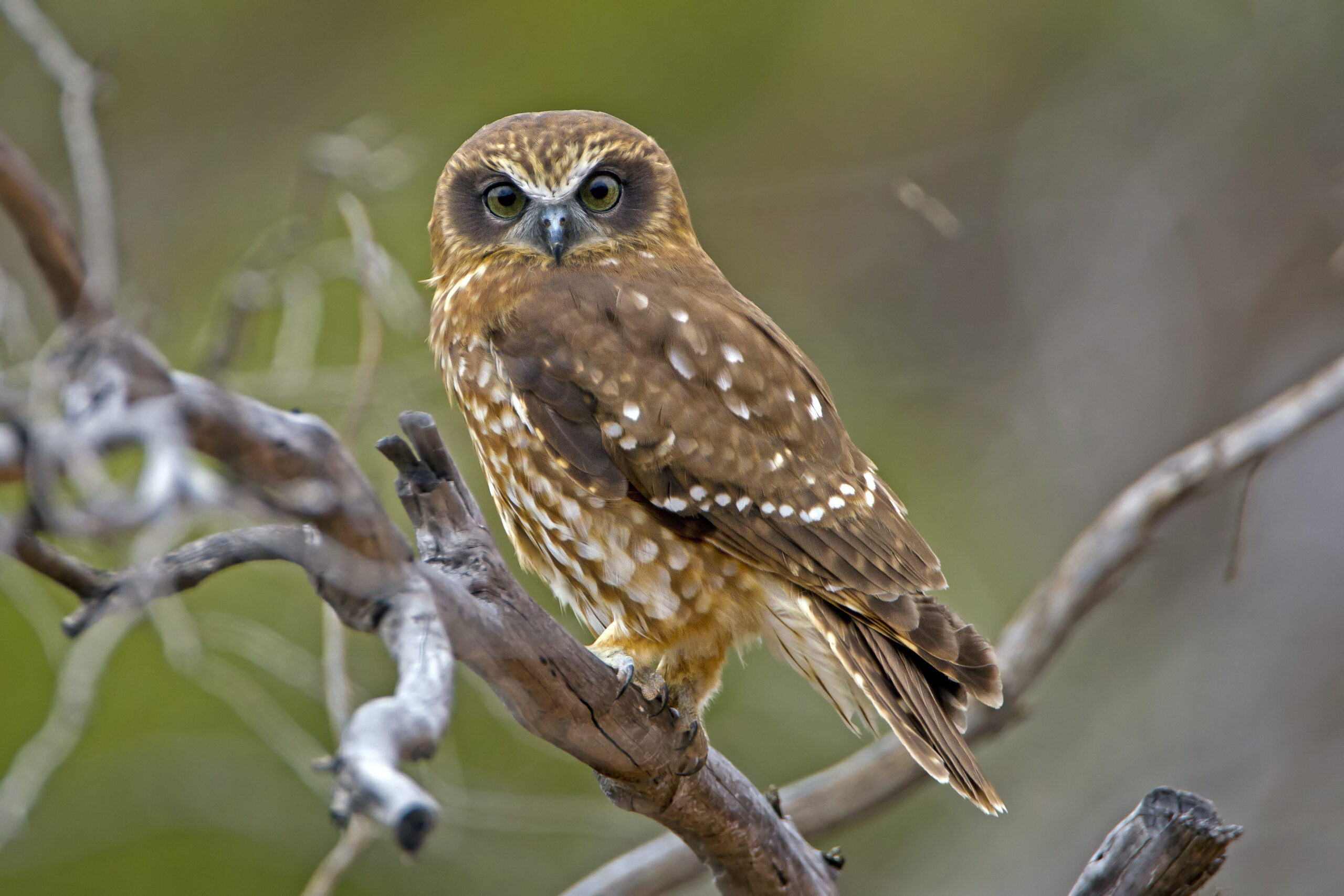

With its haunting, melodic call echoing through dusk and darkness, the Southern Boobook (Ninox boobook) is one of Australia’s most widespread and well-known nocturnal birds. Often referred to simply as the “boobook owl,” this small but highly vocal species is a silent predator of the night, found across a broad range of habitats. Its presence, often only betrayed by its signature “boo-book” call, is a familiar part of the Australian bush soundtrack.
Identification
The Southern Boobook is a compact owl, measuring approximately 27-36 cm in length, with large yellow-green eyes and a rounded head lacking ear tufts. Its plumage varies from rich brown to grey-brown, patterned with lighter streaks and spots on the underparts and wings. The facial disc is pale and slightly framed by darker feathers, aiding in sound direction while hunting. The beak is relatively small but strong and the talons are well-developed for seizing small prey. Juveniles are fluffier and paler with less distinct markings.
Habitat and Distribution
Ninox boobook is the most widely distributed owl in Australia, found in all states and territories including both Western Australia and Queensland. It occurs in a variety of wooded habitats, from dense forests and open woodlands to farmland, urban parks and suburban areas with mature trees. While tolerant of habitat modification, the species prefers areas with sufficient canopy cover for roosting and a reliable prey base for hunting.
Ecological Role
As a nocturnal predator, the Southern Boobook plays a vital role in controlling populations of rodents, insects and small reptiles. It primarily hunts from a perch, scanning its surroundings before swooping down on unsuspecting prey. Its diet varies with availability but commonly includes beetles, moths, spiders, small mammals and occasionally birds. By regulating these populations, it helps maintain ecological balance in both natural and human-altered environments.
Behaviour and Reproduction
Boobooks are mostly solitary or found in pairs during the breeding season, which occurs from August to January depending on climate. They are highly territorial and known for their duetting calls at night, used both for mate bonding and territory defence. Nests are typically made in tree hollows lined with decaying wood or leaf litter. Females lay two to three eggs, which are incubated for about a month while the male supplies food. Fledglings remain dependent for several weeks after leaving the nest, learning hunting skills under parental guidance.
Conservation Status
The Southern Boobook is listed as Least Concern under both the Queensland Nature Conservation Act 1992 and the Western Australian Biodiversity Conservation Act 2016, reflecting its wide distribution and adaptability. However, certain regional populations are monitored for signs of decline, particularly where habitat fragmentation is severe.
Threats
While generally resilient, the species is still vulnerable to a range of human-induced threats. Loss of large hollow-bearing trees due to land clearing, logging and urban expansion significantly reduces available nesting and roosting sites. Rodenticides and pesticide use can lead to secondary poisoning, especially in urban and agricultural areas. Vehicle collisions are also a common mortality factor, particularly in peri-urban environments where owls hunt near roads.
Conservation Efforts
The protection of mature trees, especially those with hollows, is key to the continued success of Ninox boobook. Retention of habitat corridors, control of pesticide use and community education programs contribute to its conservation. The species also benefits from nest box programs in areas where natural hollows are scarce and from monitoring efforts that help track population health and distribution trends.
Final Thoughts
The Southern Boobook is more than just an owl – it is a sentinel of the night, a keeper of the bush’s quieter hours. With its soft but persistent call and ghostlike flight, it connects Australians to the wild spaces still present in both remote landscapes and suburban backyards. Protecting Ninox boobook means preserving the integrity of these ecosystems and ensuring that the “boo-book” continues to echo through the eucalyptus and casuarinas of the Australian night.
Fauna Resources specialises in the safe handling of a range of different fauna species, through safe, effective and ethical fauna solutions. By providing dedicated fauna services, through passionate fauna spotter catchers and fauna specialists, we can support the unique terrestrial ecosystems and rich biodiversity Australia has to offer.
For more information about our specialist fauna services contact Fauna Resources today.